Manual Trading vs Automation-Based Trading — Which is Better for Modern Investors?
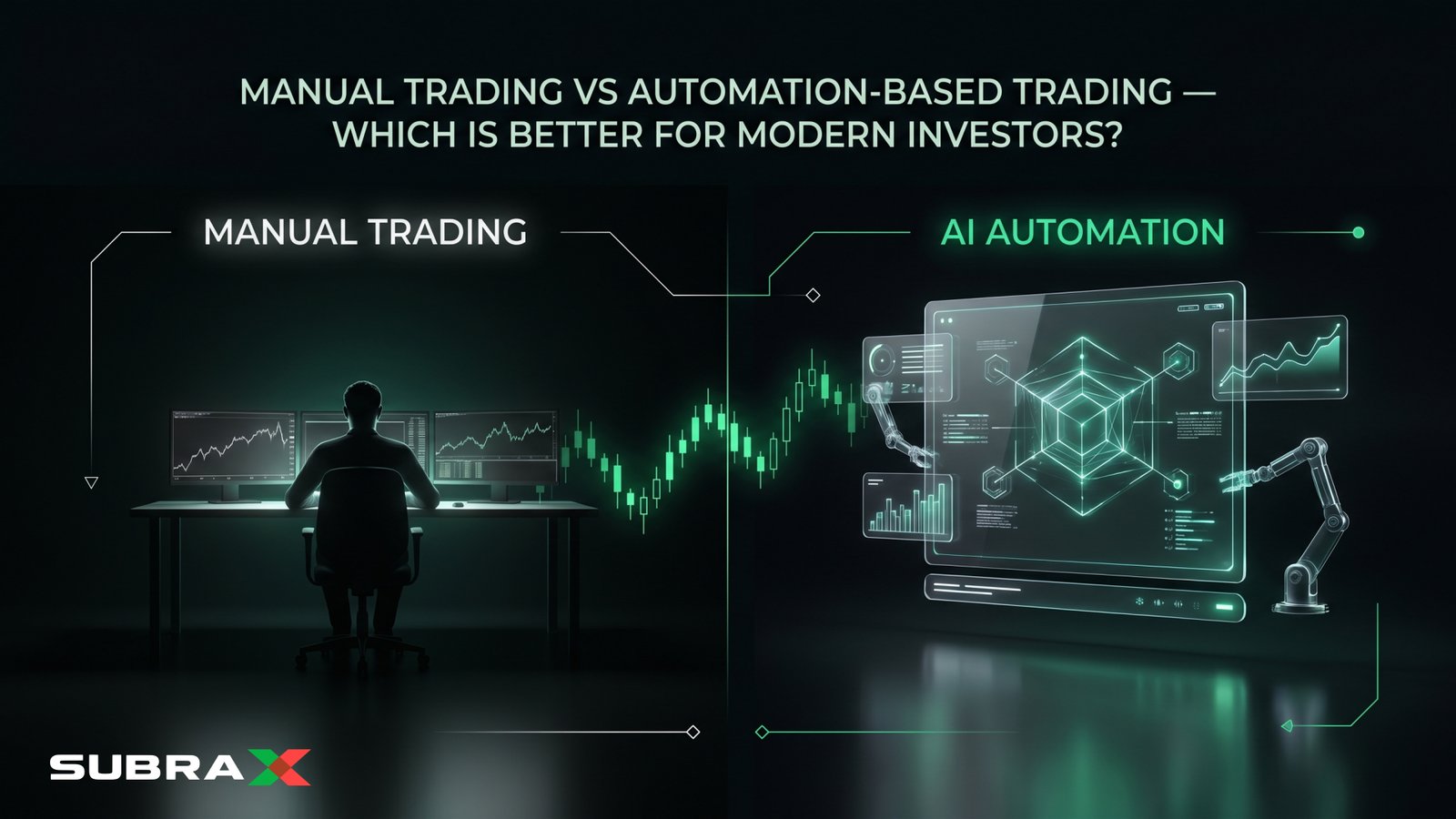
Financial markets have evolved significantly over the past few years, and trading methods are changing along with them. Modern investors now have access to advanced technologies that simplify market analysis, improve execution speed, and support more efficient decision-making. As a result, one major discussion in the trading industry continues to grow — manual trading versus automation-based trading.
Both approaches have their advantages, and each trading style suits different types of investors. Understanding how these methods work can help traders choose the right approach based on their goals, experience, and trading strategies.
What is Manual Trading?
Manual trading refers to the traditional method where traders analyze market conditions, monitor price movements, and execute trades themselves. Every trading decision is made based on personal analysis, market knowledge, and individual judgment.
Many traders prefer manual trading because it provides direct control over trading activities. Investors can react based on market news, trends, and their own understanding of financial conditions.
Manual trading generally involves:
- Market research and chart analysis
- Monitoring price movements
- Identifying trading opportunities
- Executing trades manually
- Managing risks independently
While manual trading offers flexibility and personal involvement, it can also become time-consuming and emotionally challenging during highly volatile market conditions.
Understanding Automation-Based Trading,
Automation-based trading uses advanced systems and programmed strategies to monitor markets and execute trades automatically. Instead of manually tracking every market movement, traders can rely on automated systems to identify opportunities and respond instantly.
These systems are designed to follow predefined conditions and trading rules without emotional influence. Automation helps improve consistency, speed, and efficiency in fast-moving financial environments.
Automation-based trading supports:
- Real-time market monitoring
- Faster trade execution
- Consistent strategy implementation
- Reduced manual workload
- Improved trading efficiency
As technology continues evolving, more investors are shifting toward automation to simplify trading operations and improve overall performance.
Key Differences Between Manual and Automated Trading
Manual and automation-based trading differ mainly in speed, execution, emotional involvement, and operational efficiency.
Manual Trading
- Requires constant monitoring
- Decisions are based on personal judgment
- Slower execution speed
- Higher emotional influence
- Greater flexibility in decision-making
Automation-Based Trading
- Operates through predefined strategies
- Faster execution and analysis
- Reduced emotional trading
- Continuous market monitoring
- Improved consistency and scalability
Both approaches can be effective depending on the trader’s experience level and market goals.
Pros and Challenges of Both Trading Methods
Manual trading allows investors to adapt quickly to unexpected market events and use personal expertise during decision-making. However, emotional reactions and delayed execution can sometimes affect trading consistency.
Automation-based trading improves efficiency and reduces manual effort, but it also requires proper setup, strategy planning, and monitoring to ensure effective performance.
Advantages of Manual Trading
- Greater personal control
- Flexible decision-making
- Better for traders who prefer hands-on analysis
Advantages of Automation-Based Trading
- Faster market response
- Reduced emotional errors
- Continuous monitoring
- Better consistency in execution
Understanding these strengths and limitations helps investors choose a trading approach that aligns with their trading style.
Which Trading Style Fits Today’s Investors?
Modern financial markets are becoming increasingly fast-paced and data-driven. For traders managing multiple assets or operating in active markets, automation-based trading often provides higher efficiency and better scalability.
However, manual trading still remains valuable for investors who prefer direct market involvement and personalized strategies.
In many cases, traders combine both approaches by using automation for monitoring and execution while maintaining manual oversight for strategy adjustments and market interpretation.
This balanced approach is becoming increasingly popular among modern investors.
Why More Traders are Choosing Automation
The growing complexity of financial markets has increased the demand for advanced trading technologies. Automation helps traders save time, improve consistency, and respond faster to market changes.
With real-time analysis and faster execution becoming essential in competitive markets, automation-based systems are helping traders adapt to modern financial environments more effectively.
As technology continues advancing, automation is expected to become an even more important part of the future trading ecosystem.
Conclusion
Both manual trading and automation-based trading offer unique advantages for modern investors. While manual trading provides flexibility and personal control, automation-based trading delivers speed, efficiency, and consistency in rapidly changing markets.
The right choice depends on trading goals, experience, and preferred strategies. As financial markets continue evolving, automation is increasingly helping traders make smarter and more efficient decisions.
Looking to explore smarter and more efficient trading solutions?
Discover advanced automation-based trading experiences with SubraX Markets.
Explore SubraX Markets